
How to Relax When Anxious: 9 Calming Techniques for Busy Moms
It’s 9pm. The kids are finally asleep, the house is quiet, and instead of relaxing, your heart is racing. Your mind is replaying the day, planning tomorrow, and worrying about things that haven’t even happened. You know you should “just relax.” But how, exactly, when your body didn’t get the memo?
I’m Bianca, and I’ve been there more times than I can count. The good news: there are simple, science-backed ways to calm your body and mind when anxiety kicks in, and most of them take less than five minutes. Here are the ones that actually work, especially for busy moms.
The short answer: to relax when you’re anxious, start with your body, not your thoughts. Slow your breathing (especially a long exhale), ground yourself in the present with your senses, release tension from your muscles, and move or step outside if you can. Then build small daily habits, like better sleep, less caffeine, and a calming evening routine, that lower your stress over time. If anxiety is frequent or overwhelming, talk to your doctor.
Need a calmer evening routine? Many moms build a gentle wind-down ritual with herbal tea, a warm shower, or a low-dose mood gummy for nights when they just want to unwind.
What’s Happening in Your Body When You Feel Anxious
When you feel anxious, your body switches into “fight or flight” mode. Your heart beats faster, your breathing gets quick and shallow, your muscles tense up, and your mind scans for danger. It’s a built-in alarm system, and it’s great for real emergencies. The problem is, it also goes off over emails, bills, and a toddler who won’t nap.
The fastest way to turn that alarm down is through your body. When you slow your breathing and relax your muscles, you send a signal to your nervous system that you’re safe. Your thoughts usually follow.
Quick Ways to Relax When You’re Anxious (In 5 Minutes or Less)
1. Try a “cyclic sigh”
This simple breathing pattern was tested in a Stanford study where people practiced it for five minutes a day for a month. It improved mood more than mindfulness meditation did in the same study. Here’s how:
- Breathe in through your nose.
- When your lungs feel full, take a second, short sip of air through your nose.
- Slowly exhale through your mouth until all the air is out.
- Repeat for one to five minutes.
The long, slow exhale is the key. Even two or three rounds can take the edge off.
2. Box breathing
Breathe in for a count of 4, hold for 4, breathe out for 4, hold for 4. Repeat four or five times. It’s easy to remember and works anywhere, even in the school pickup line.
3. The 5-4-3-2-1 grounding trick
When your mind is racing into the future, bring it back to right now. Name:
- 5 things you can see
- 4 things you can touch
- 3 things you can hear
- 2 things you can smell
- 1 thing you can taste
It sounds simple, but it gently pulls your attention out of worry and into your body.
4. Progressive muscle relaxation
Starting at your feet, tense one muscle group for about five seconds, then release it and notice the difference. Move up through your legs, stomach, hands, arms, shoulders, and face. Anxiety lives in tight shoulders and a clenched jaw, and this helps you let it go.
5. Name what you’re feeling
Say it out loud or in your head: “I’m feeling anxious right now.” Putting a simple name to the feeling can make it feel a little less overwhelming and more manageable.
6. Put a hand on your chest
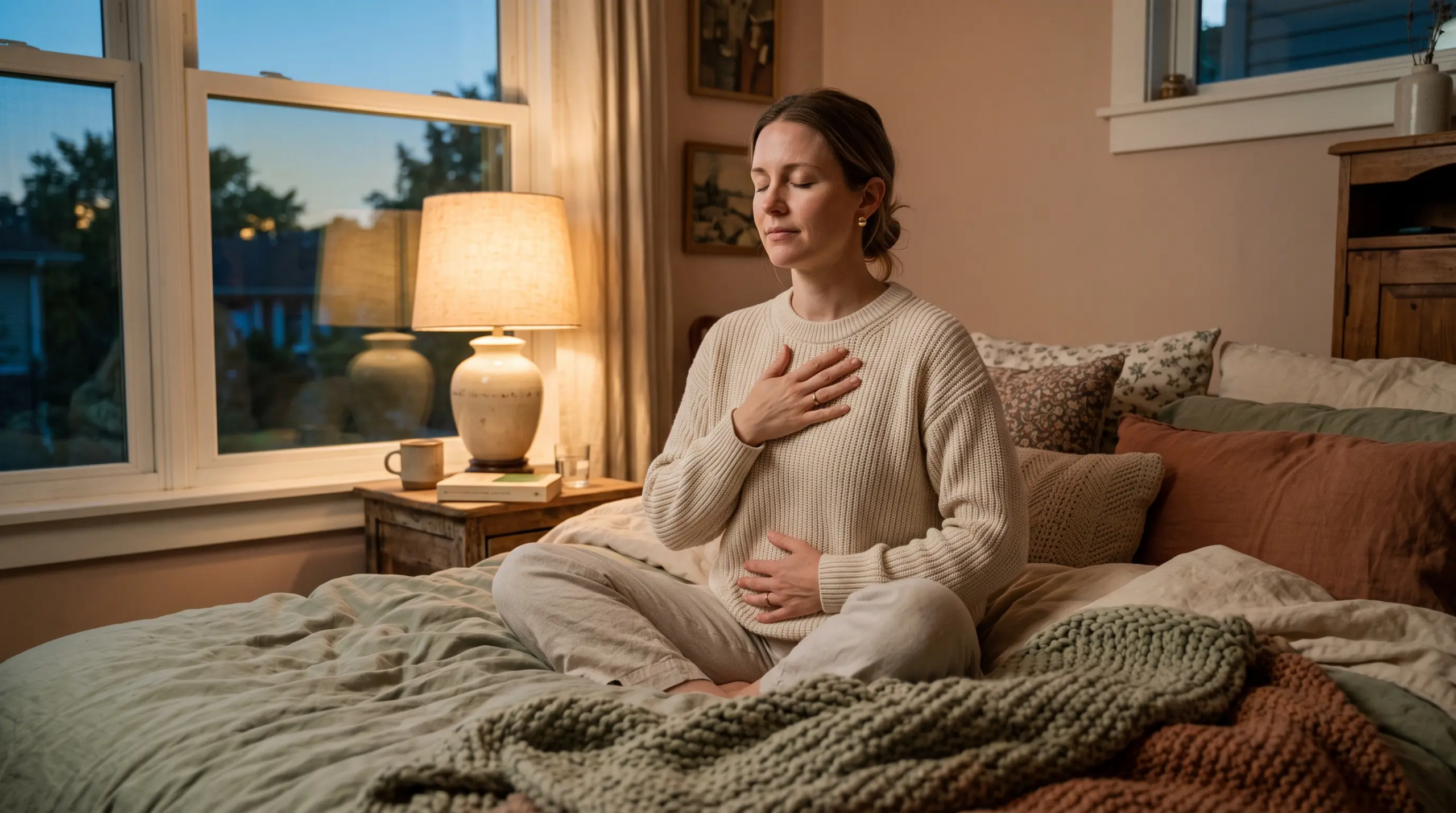
Place one hand on your heart and one on your belly, and breathe slowly into your belly. It’s calming, grounding, and something you can do quietly anywhere.
7. Move your body
Anxiety is energy with nowhere to go. A brisk walk, a few jumping jacks, a dance in the kitchen, or even shaking out your hands and arms can help burn some of it off.
8. Step outside
Fresh air, natural light, and a change of scenery can reset your mood quickly. Even two minutes on the porch helps.
9. Hum, sing, or sigh out loud
Humming a song or letting out a long, audible sigh slows your exhale naturally. Bonus: kids think it’s funny, so they often join in.
How to Relax Your Mind at Night
For many moms, anxiety gets loudest at night, once the house is finally quiet. A few things that help:
- Do a “worry dump.” Write down everything on your mind, including tomorrow’s to-do list. Getting it on paper tells your brain it doesn’t have to hold onto it.
- Dim the lights an hour before bed and switch to lamps instead of overhead lights.
- Put your phone away. Late-night scrolling and news can keep your mind wired.
- Create a calming ritual: a warm shower, herbal tea, a few stretches, a good book, or your favorite comfort show.
- Swap the wine. A glass of wine might feel relaxing at first, but alcohol can disrupt sleep later in the night. Many moms now choose herbal tea, a mocktail, or a gentle, low-dose gummy as part of their evening wind-down instead.
If you want a full routine to follow, my guide to realistic self-care for moms includes an easy evening wind-down.
How to Stay Calm When the Kids Are Around
You can’t always step away when anxiety hits. Some mom-friendly options:
- Breathe together. “Let’s smell the flower and blow out the candle” turns deep breathing into a game for little ones and helps you too.
- Lower your voice. Speaking slowly and softly can calm both you and your kids.
- Take a “bathroom break.” Two minutes behind a closed door for a few slow breaths is completely valid.
- Get outside together. A quick walk or backyard play resets everyone’s mood.
- Name it for them, too. “Mommy feels a little stressed, so I’m going to take some deep breaths.” You’re teaching them a skill they’ll use for life.
Daily Habits That Help You Feel Less Anxious Over Time
Quick techniques help in the moment. These habits help lower your overall stress level, so anxiety doesn’t hit as hard:
- Protect your sleep as much as mom life allows. Being tired makes everything feel bigger.
- Watch the caffeine, especially after noon. Too much can mimic anxiety: racing heart, jitters, and restlessness.
- Move most days, even a 15-minute walk.
- Eat regular meals. Skipping meals and running on coffee can make you shaky and on edge.
- Share the mental load. Carrying every task, appointment, and worry alone is exhausting. My post on the mental load of motherhood has ideas for sharing it.
- Stay connected. Talking to a friend who gets it is one of the best stress relievers there is.
- Limit doomscrolling and news, especially before bed.
When to Talk to a Doctor
Everyone feels anxious sometimes. But it may be time to reach out for help if:
- You feel anxious or worried most days, for weeks at a time
- Anxiety keeps you from sleeping, eating, or enjoying your life
- You have panic attacks (sudden, intense fear with a pounding heart, shortness of breath, or dizziness)
- You’ve recently had a baby and feel constant worry or fear (postpartum anxiety is common and treatable; read more in my postpartum anxiety guide)
Anxiety is very treatable, and your doctor or a licensed therapist can help. The National Institute of Mental Health also has helpful information. If you ever feel like you might harm yourself or are in crisis, call or text 988 (the Suicide & Crisis Lifeline) or call 911.
Frequently Asked Questions
How do I relax when I’m anxious?
Start with your body: slow your breathing with a long exhale, try grounding with your five senses, release muscle tension, and move or step outside. These calm your nervous system, and your mind usually follows.
What is the fastest way to calm anxiety?
Slow breathing with a long exhale, like the cyclic sigh or box breathing, is one of the fastest ways to calm your body. Many people feel a difference within a minute or two.
How do I relax my mind at night?
Write down your worries, dim the lights, put your phone away, and follow a calming routine like a warm shower, herbal tea, or a book.
How can I calm down when my kids are around?
Turn deep breathing into a game, lower your voice, take a short break if you need to, and get outside together. Naming your feelings out loud also teaches your kids healthy coping skills.
Does exercise help with anxiety?
Many people find that regular movement, even short walks, helps them feel calmer and less tense over time.
When should I see a doctor about anxiety?
If anxiety is frequent, lasts for weeks, causes panic attacks, or gets in the way of sleep, eating, or daily life, talk to your doctor or a licensed therapist.
The Bottom Line
When anxiety hits, you don’t have to think your way out of it. Start with your breath, ground yourself in the moment, and let your body tell your mind that you’re safe. Then build small daily habits that make anxious moments less frequent. And if anxiety is taking over your days, please reach out for support. You deserve to feel calm, not just survive the day.
Keep Reading
- Overstimulated Mom? What It Means and What Actually Helps
- Mom Burnout Is Real: Signs You Are Running on Empty
- Self-Care for Moms: Realistic Ideas That Actually Fit Your Day
- Best Edibles for Relaxing: A Mom’s Honest Guide
This article is for general information only and isn’t medical advice. If you’re struggling with anxiety, please talk to your doctor or a licensed mental health professional. Hemp products are for adults 21+ and are not intended to diagnose, treat, cure, or prevent any disease. High Society Mama is affiliated with Society’s Plant.