What Is Decarboxylated Cannabis?
I spent 15 years in the wine and spirits industry before I started a hemp farm in Michigan. The irony isn’t lost on me. But here’s what I learned: understanding how your wellness products actually work changes everything. When I first heard the word “decarboxylation,” I thought someone was showing off their chemistry degree. Turns out, it’s just the fancy term for activating cannabis, so it actually does what you want it to do. Whether you’re working with THCa flower or making your own edibles at home, knowing how to decarb properly is the difference between wasted flower and a product that actually works.
As a mom running a family hemp farm and serving over 10,000 customers, I get asked about decarbing constantly. People want to understand what they’re consuming and how to use it responsibly. So let’s break down the science without the pretension, talk about why it matters, and walk through exactly how to decarb at home if that’s your thing.
Decarboxylated Cannabis: Your Complete Guide to Activation
Decarboxylated cannabis is flower that has been heated to convert inactive cannabinoids into their active forms. In plain English? Raw cannabis doesn’t get you high or provide most therapeutic benefits until you apply heat. The cannabinoids in fresh flower, like THCa and CBDa, have an extra carboxyl group attached. When you heat them through smoking, vaping, or baking, that carboxyl group releases as carbon dioxide, and boom—you’ve got activated THC and CBD that your body can actually use.
What Happens During Decarboxylation
Think of decarboxylation like toasting bread. Raw flour doesn’t taste like toast, right? Heat transforms it. Same principle here. When you apply heat to cannabis flower, typically around 220-245°F for 30-45 minutes, you’re chemically changing the molecular structure. THCa becomes THC. CBDa becomes CBD. This isn’t just stoner science—it’s actual chemistry that determines whether your flower works or sits there looking pretty but doing nothing.
Why Raw Cannabis Doesn’t Work
I’ve had customers tell me they tried eating raw flower and felt nothing. Of course, they didn’t. Your digestive system can’t convert THCa to THC. You need heat. This is why smoking works instantly—combustion decarbs the flower as you light it. It’s also why edibles require decarbing first. You’re doing manually what fire does automatically. Understanding this saves you from wasting good flower and wondering why nothing happened.
Why Do You Need to Decarb Weed?
Short answer: activation. Long answer: It’s about making sure you’re getting what you paid for. When you purchase THCa flower from responsibly sourced farms, you’re getting a legal cannabinoid that converts to THC when heated. But if you don’t decarb it properly before making edibles, you’re consuming inactive THCa that won’t give you the relaxation or relief you’re looking for.
The Science of Cannabinoid Conversion
THCa is the acidic precursor to THC. It’s non-intoxicating in its raw form, which is why THCa flower is legal in many states where THC isn’t. But apply heat through smoking, vaping, or controlled oven decarbing, and that “a” drops off. You’re left with activated THC that binds to your endocannabinoid receptors and produces the effects you’re seeking—whether that’s unwinding after the kids are in bed, creative focus, or just taking the edge off a long day. Learn more about the basics of decarboxylation and why proper activation matters.
What Happens If You Skip Decarbing
You waste your flower, plain and simple. I’ve heard too many stories of people grinding up expensive THCa flower, mixing it into brownies without decarbing, and then wondering why they felt nothing. Raw cannabinoids don’t activate in your digestive system. No amount of wishful thinking changes chemistry. If you’re making edibles, decarbing is non-negotiable. If you’re smoking or vaping, the heat source does it for you automatically.
How Do You Decarb Weed at Home?
Decarbing at home isn’t complicated, but it does require attention to temperature and time. Too hot and you’ll destroy cannabinoids and terpenes. Too cool, and you won’t fully activate them. The sweet spot is 220-245°F for 30-45 minutes. I’ll walk you through the most common method—oven decarbing—because it’s accessible and effective for most home users.
The Oven Decarb Method Step-by-Step
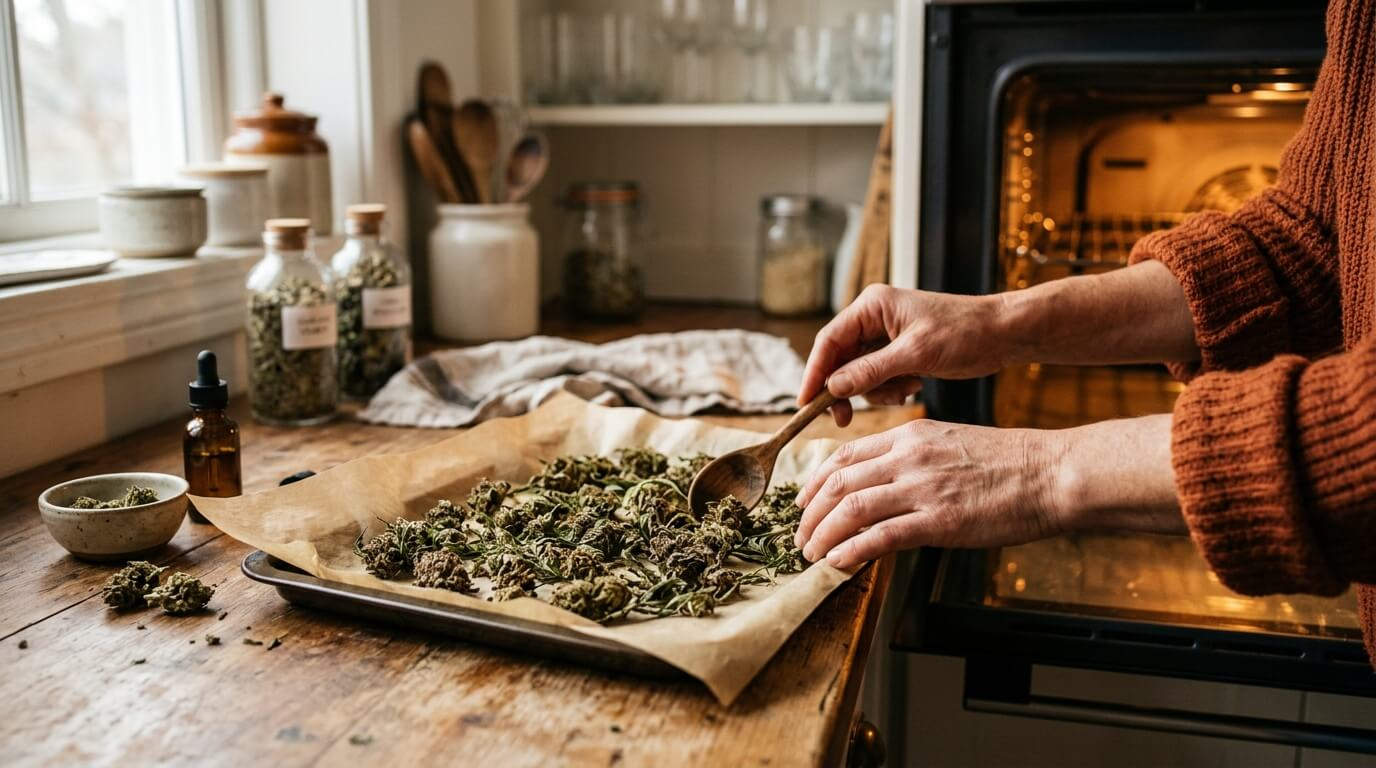
Preheat your oven to 240°F. While it heats, break up your flower into small, even pieces—don’t grind it fine yet, that comes later. Spread the flower in a single layer on a baking sheet lined with parchment paper. Once your oven hits temp, slide the tray in and set a timer for 40 minutes. Your house will smell like cannabis, fair warning. After 40 minutes, pull it out and let it cool completely before grinding or using in recipes. The flower should look slightly darker and feel dry and crumbly.
Temperature and Time: Why Precision Matters
Here’s where people mess up: they crank the oven too high, thinking faster is better. Wrong. Above 300°F, you start degrading THC and losing terpenes that contribute to the entourage effect. Below 200°F, you’re not fully decarbing, which means weaker potency. An oven thermometer is your friend here. Most home ovens run hot or cold by 10-25 degrees. Verify your actual temp, not just what the dial says. This precision is what separates effective decarbing from wasted flower.
How to Tell When Decarbing Is Complete
Visual cues help. Properly decarbed flower shifts from bright green to a darker, more golden-brown hue. It should look toasted, not burned. The texture becomes brittle and crumbly. If it still looks fresh and vibrant green, it needs more time. If it’s dark brown or black, you’ve gone too far and destroyed cannabinoids. There’s a learning curve, but after one or two batches, you’ll recognize the sweet spot.
Decarbing in the Oven vs Other Methods
The oven method is popular because most people have access to one, but it’s not the only option. Let’s compare it to other decarbing techniques so you can choose what works for your situation and budget.
Oven Decarbing: Pros and Cons
Pros: accessible, inexpensive, effective when done correctly, allows you to decarb larger quantities. Cons: smell is intense and spreads through your house, temperature inconsistencies in home ovens can affect results, and it requires monitoring. If you live somewhere you need to be discreet, or your oven runs unpredictably, this method has limitations. But for most home users making edibles occasionally, it’s perfectly functional.
Sous Vide Decarbing for Odor Control
Sous vide decarbing seals flower in a vacuum bag and submerges it in a water bath held at precise temps—usually 203°F for 90 minutes. The benefit? Virtually no smell since it’s sealed. The drawback? It takes longer and requires a sous vide immersion circulator. If odor control is critical or you want precise temp management, sous vide is worth considering. But it’s overkill if you’re just making occasional batches of edibles and don’t mind your house smelling like a dispensary for an hour.
Decarboxylation Machines: Are They Worth It?
Devices like the Ardent Nova or LEVO are designed specifically for decarbing and infusing. They automate temperature and time, which removes guesswork. If you’re making edibles regularly or you want foolproof consistency, they’re worth the investment. But if you’re decarbing once a month, a $200-300 machine feels excessive when your oven works fine. It’s about how often you’ll use it and whether convenience justifies the cost.
What Does It Mean to Decarb Weed?
To decarb weed means to activate the cannabinoids through controlled heating so they produce their intended effects. It’s the process that transforms raw, inactive compounds into the therapeutic or recreational substances people seek. Without decarbing, you’re consuming plant material with minimal bioavailability. With proper decarbing, you’re unlocking the full potential of those cannabinoids.
Decarbing for Edibles vs Smoking
When you smoke or vape flower, combustion or vaporization instantly decarbs the cannabinoids. You don’t need a separate step because heat application and consumption happen simultaneously. But edibles are different. You’re adding flower to recipes where the cooking temperature might not be high enough or sustained long enough to fully decarb. That’s why you decarb first, then infuse into butter, oil, or directly add to recipes. It’s a mandatory step for functional edibles.
How Decarbing Affects Potency and Flavor
Proper decarbing maximizes potency by converting the highest percentage of THCa to THC. But over-decarbing destroys cannabinoids and terpenes, leaving you with a weaker, harsher-tasting product. Terpenes—the aromatic compounds that give cannabis its flavor and contribute to effects—are volatile and evaporate at high temps. That’s why low-and-slow decarbing preserves more of the plant’s character. Rushing it costs you potency and flavor.
Why Decarb Flower for Edibles and Tinctures
Because your stomach can’t do what heat does. Ingesting raw flower gives you minimal effects since THCa and CBDa aren’t effectively absorbed or activated through digestion. Decarbing before making cannabutter, oil infusions, or tinctures ensures that when you consume the final product, you’re getting active cannabinoids that your body can use. It’s the difference between functional medicine and expensive lawn clippings.
Making Cannabutter After Decarbing
Once your flower is decarbed, making cannabutter is straightforward. Melt butter on low heat, add your decarbed flower, and let it simmer for 2-3 hours, stirring occasionally. Strain out the plant material, and you’ve got infused butter ready for any recipe. The decarbing step you did beforehand is what ensures that butter carries active THC. Skip it, and your brownies are just brownies with a weird texture and no effect.
Tinctures and Topicals: Decarbed vs Raw
Some people prefer raw cannabinoid tinctures for non-intoxicating wellness support. THCa and CBDa have their own benefits—anti-inflammatory, neuroprotective properties without the high. But if you want a tincture that produces psychoactive or stronger therapeutic effects, you need to decarb first. Same with topicals. Decarbed cannabis in salves or balms provides activated cannabinoids that absorb through the skin. Raw cannabis in topicals won’t produce the same effects. Know what you’re making and decarb accordingly.
Understanding THCa Flower and Decarboxylation
THCa flower has become popular because it’s a legal loophole in many states—technically, THCa isn’t THC until you heat it. But that also means understanding decarboxylation is essential if you’re using THCa flower responsibly. Whether you’re sourcing from quality canna gummies or buying raw flower, knowing how activation works keeps you informed and in control.
THCa vs CBD: What’s the Difference?
THCa converts to THC when heated, producing psychoactive effects. CBDa converts to CBD, which is non-intoxicating but offers therapeutic benefits like anxiety relief and anti-inflammatory support. If you’re comparing THCa flower vs CBD flower, the key difference is intention. THCa is for those seeking relaxation or recreational effects. CBD is for wellness support without intoxication. Both require decarbing to maximize their respective benefits.
Sourcing Quality THCa Flower
Not all THCa flower is created equal. Quality matters—pesticides, heavy metals, and improper curing all affect your final product. When you’re putting in the effort to decarb properly, start with flower worth the work. Look for farms that test for purity and potency, grow without harmful chemicals, and cure their flower correctly. Responsible sourcing means you’re activating cannabinoids that are clean and effective, not mystery plant material sprayed with who-knows-what.
Alternatives to Decarbing: Ready-Made Options
Here’s the truth: not everyone wants to decarb flower at home. Maybe you don’t like the smell, don’t trust your oven’s temp, or simply want the convenience of products that are already activated and dosed consistently. That’s completely valid. There are excellent, ready-made options that take the guesswork out of cannabinoid consumption.
Why Pre-Made Edibles Skip the Decarb Step
Products like High Spirits Microdose Gummies with 5mg THC, 5mg THCV, and 20mg CBG are already decarbed during manufacturing. The cannabinoids are activated, measured, and infused into each gummy with precision you can’t replicate at home without lab equipment. For moms who want functional support without turning their kitchen into a makeshift lab, ready-made edibles offer consistency and ease.
Starting Low: Microdosing for Beginners
If you’re new to cannabis or coming from a place where wine was your go-to and you’re exploring microdosing gummies as a sustainable alternative, starting with pre-dosed, decarbed products makes sense. Something like Good Day Gummy with just 1.5mg THC and lion’s mane offers gentle daytime calm without overwhelm. No decarbing, no measuring, just functional support that fits into your routine. The goal isn’t to feel nothing; it’s to feel like yourself again.
When to Choose Gummies Over DIY
Choose ready-made options when you want reliability, convenience, and safety. DIY decarbing and edibles are great for those who enjoy the process or want customization. But there’s zero shame in grabbing a jar of mood gummies instead of spending an afternoon decarbing flower. Your time has value. If pre-made products give you the support you need without added stress, that’s a win.
Your Next Step: Decarb Smart or Choose What’s Already Activated
Understanding decarboxylation gives you power—power to make informed choices about what you consume and how you use cannabis responsibly. Whether you choose to decarb flower at home for DIY edibles or opt for consistently dosed, pre-made products, you’re now equipped with the knowledge to do it right. As someone who’s navigated the shift from wine-fueled unwinding to sustainable, functional cannabis support, I’ll tell you this: the method matters less than the outcome. Find what works for your life, your comfort level, and your wellness goals.
If you’re ready to explore options that skip the decarb guesswork, check out our collection of mood edibles designed for real life. From microdose support to sleep and focus formulas, every product is decarbed, tested, and crafted on our family farm in Michigan. You’re not broken. You’re just looking for better tools. Let’s find them together.